How to Use Forex Market Analysis and News to Trade

How Do You Trade With Market Analysis and News?
Use analysis as preparation, not instruction. Read the daily outlook for the market you trade, mark its key levels on your own chart, and decide in advance where you would enter, where your stop would go and what would keep you out. News explains the move; your plan decides the trade.
This guide shows you a simple way to use the free daily analysis on ForexR together with market news: what is inside each article, how to turn its levels and scenarios into a plan of your own, and the habits that stop news from talking you into bad trades.
What You Will Find on the Analysis Page
The ForexR analysis page publishes short, structured articles through the trading week. Daily forecasts cover major currency pairs, gold and other widely traded markets one by one. Session briefs sum up Asia, London and New York as each hands over. Around big calendar events you will see previews and quick reactions, and when a story moves prices sharply, a news piece explains what changed.

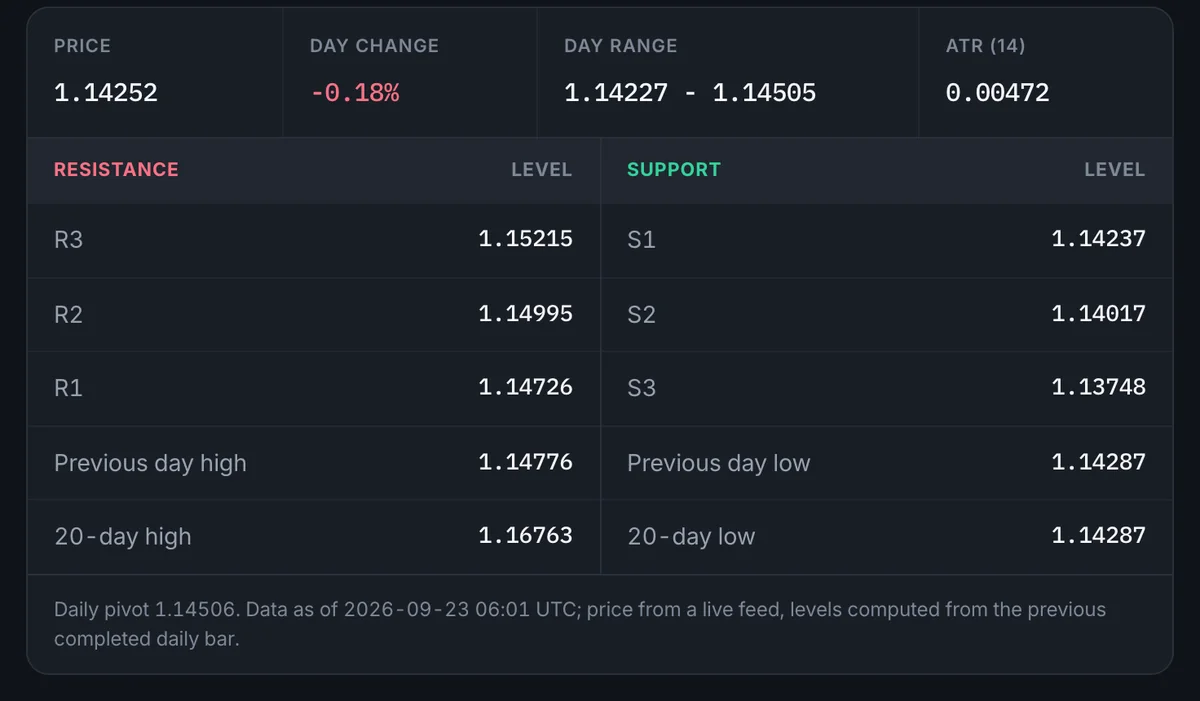
A daily forecast has the same parts every time: a live price snapshot, a key levels table built around the daily pivot with three resistance and three support levels, the previous day's range, an annotated chart, and two written trading scenarios. Every article also shows the exact time its data was taken, which matters more than it looks.
The analysis is produced by an automated engine and published under named ForexR analyst bylines. The levels are computed in code from live market data, the text is written from that data alone, and each draft is checked against the same numbers before it goes out. The full method is public, so you can judge for yourself how much weight to give it.
Analysis Is a Map, Not a Signal
Market analysis describes conditions: the trend, the levels that matter today, and what would confirm or reject each scenario. It never tells you to buy or sell. That makes it the opposite of forex signals, which hand you an entry, a stop and a target and ask you to trust whoever sent them.
The difference matters because a level means nothing without context. Analysis gives you the map; you still choose the route, the vehicle and whether to travel at all. A useful test before any entry: if you cannot explain in one sentence why this trade, at this level, right now, you are following a tip, not trading a plan.
A Simple Routine: Read, Mark, Plan
You get the most from analysis with a short routine before your trading session, not by reading all day.
- Read the forecast for the one or two markets you actually trade, and skip the rest. More markets means shallower attention, not more chances.
- Mark the levels on your own chart: the daily pivot, the nearest support and resistance, and the previous day's high and low. If levels are new to you, start with the guide to support and resistance.
- Compare the article's view with what you see on your chart. Where the two disagree, trust neither until price picks a side.
- Write the plan: where you would enter, where the stop goes, and what would keep you out entirely. A written trading plan is what turns analysis into rules.
- Set alerts at your marked levels instead of staring at the screen. The levels do the watching for you.
How to Use the Trading Scenarios
Each forecast ends with two scenarios, one bullish and one bearish, and each names three things. The trigger is what has to happen first, usually a break of a level or a hold above one. The target is the next level price could plausibly reach if the move follows through. The invalidation is the point where the idea is simply wrong.
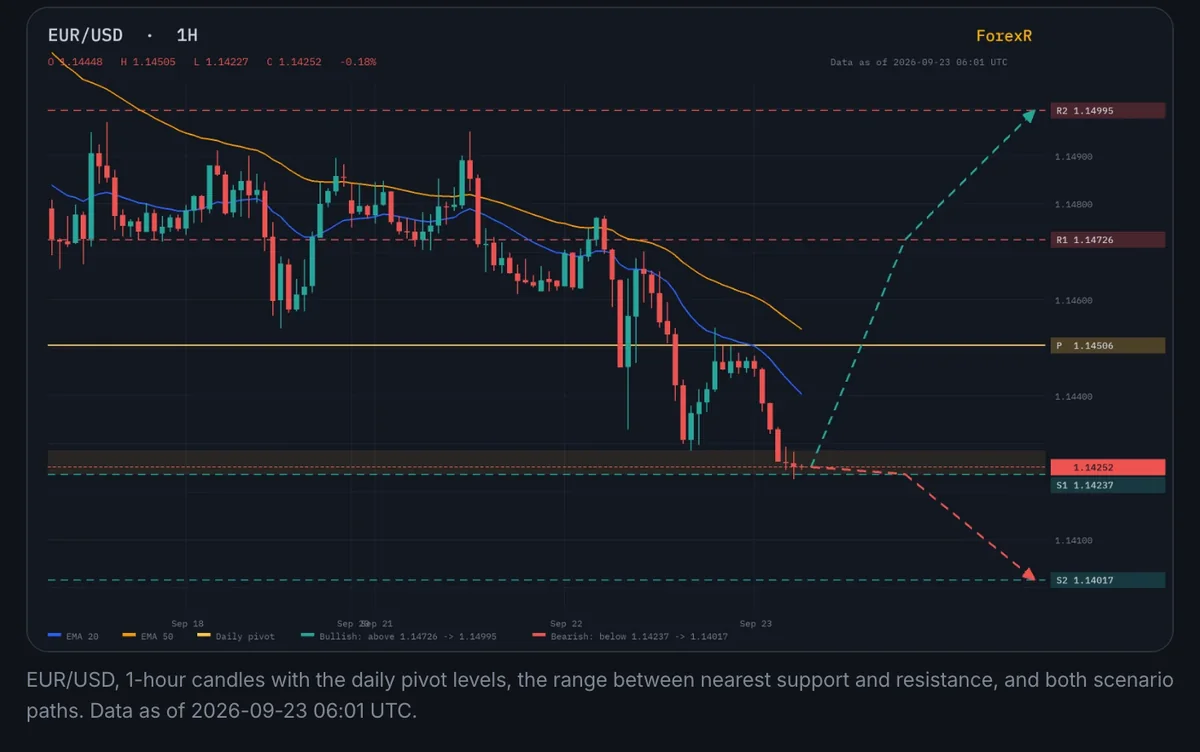
Treat scenarios as if-then statements, not predictions. Both are printed because nobody knows which one the market will choose. If price breaks the trigger, your entry idea comes alive; if it reaches the invalidation, the idea is dead, and holding on past it is hope, not analysis.
The invalidation level is also a natural place to work out a stop. Measure the distance from your planned entry to just beyond it, then use the position size calculator so that distance risks only a small share of your account, one or two percent for most traders.
How to Trade Around Market News
News moves forex in two ways: scheduled releases you can see coming, and surprises you cannot. The scheduled kind lives on the economic calendar: inflation figures, jobs reports and central bank decisions, each with a forecast number the market has already priced in. Prices react to the gap between the forecast and the actual figure, not to the figure itself.
Around a high-impact release, spreads widen, prices jump in both directions and stop orders can fill far from their level, a gap called slippage. If you are new, the safest play is to stand aside from a few minutes before the release until the first reaction settles. Trading the release itself is a strategy of its own, covered in the guide to trading the news.
After a surprise headline, read before you act. A short news piece that names the story behind a move tells you whether the market is repricing something real or just flushing out stops. The worst entries happen in the first minutes after a headline, when the move is fastest and the reason is still a guess.
When Analysis Goes Stale
Every ForexR article states when its data was taken, and that time stamp is part of the analysis. Forex runs through three overlapping sessions a day, so a forecast written in the Asian morning describes that morning's market; by the New York afternoon, price may have broken half the levels in it.
Three quick checks before acting on any article: is the current price still near the price in the snapshot, has either scenario's invalidation already been hit, and has a major release come out since it was published? Levels are recomputed every trading day from the previous completed daily bar, so yesterday's forecast is history, not guidance.
Mistakes to Avoid
- Trading the headline, not the level. Price often does the opposite of what a headline seems to demand, because the market had already priced the news in.
- Confirmation shopping. Reading analysts until one agrees with the position you already wanted is not research, it is permission.
- Taking every article as a trade. Analysis covers many markets every day; your plan should not.
- Moving a stop because a scenario should work. The invalidation level is part of the analysis; ignoring it means abandoning the analysis mid-trade while pretending to follow it.
- Reading more instead of trading less. When no plan is clear, staying flat is a position, and often the best one.
Most of these are ordinary discipline problems wearing a news costume. The guide to common forex trading mistakes covers the rest of the family.
From Reading to Trading
Start on a demo account. Follow one market's daily forecast for two weeks, mark the levels each morning, paper trade the scenarios and note how often price respects each level. That fortnight will teach you more about analysis, and about your own patience, than any argument for or against it. When you are ready to trade your plan with real money, take the same care over where you trade: compare regulated firms on the broker comparison page before you deposit.
Market analysis and news can inform a trade, but they cannot remove its risk. No level, scenario or headline knows the future, and leveraged forex and CFD trading carries a high risk of losing money quickly. Trade small, keep your stop where you planned it, and only ever risk money you can afford to lose.
FAQ
Who writes the market analysis on ForexR?
ForexR analysis is produced by an automated engine. Key levels are calculated in code from live market data, the text is written from those numbers alone, and every draft is checked against the same data before publishing. Articles appear under named ForexR analyst bylines, and the full method is described on the analysis methodology page.
How often is new analysis published on ForexR?
Most trading days bring several pieces: a daily forecast for each covered market, session briefs for Asia, London and New York, and extra articles around major economic releases or sharp moves. The exact mix changes with the calendar and with market conditions, so one quick visit before your trading session is enough.
Can market analysis predict where price will go?
No. Honest analysis describes conditions and maps the levels where buying or selling pressure has appeared before, then lays out more than one scenario. It deals in if-then statements, not certainty. Its value is preparation: you decide in advance what a break or rejection of a level would mean, instead of reacting to it live.
Should a beginner trade during news releases?
It is usually better to stand aside. During high-impact releases spreads widen, prices jump in both directions within seconds, and stop orders can fill far from their level. Watch a few releases on a demo account first to see how violent they are. Missing a move costs nothing; a bad fill in a fast market does.